
Home / western-therapies/hand-foot-reflexology
Do you know our hand and foot have specific points that correspond to different organs and different glands of the body? When the pressure is applied in these zones strategically, a lot of medical problems can be addressed, including chronic pain, along with a wide range of other benefits. The positive outcome gained is across a range of symptoms that are improved with the reflexology procedure. There are many forms of this treatment, and they vary in length of session, pressure and frequency. This refined zone therapy was developed by an American physicist. In the early twentieth century, William Fitzgerald theorized that the body could be divided into 10 vertical and equal zones. Manipulation at the periphery of these zones exhibits effects on physiopathological conditions elsewhere corresponding to the same vertical zone.
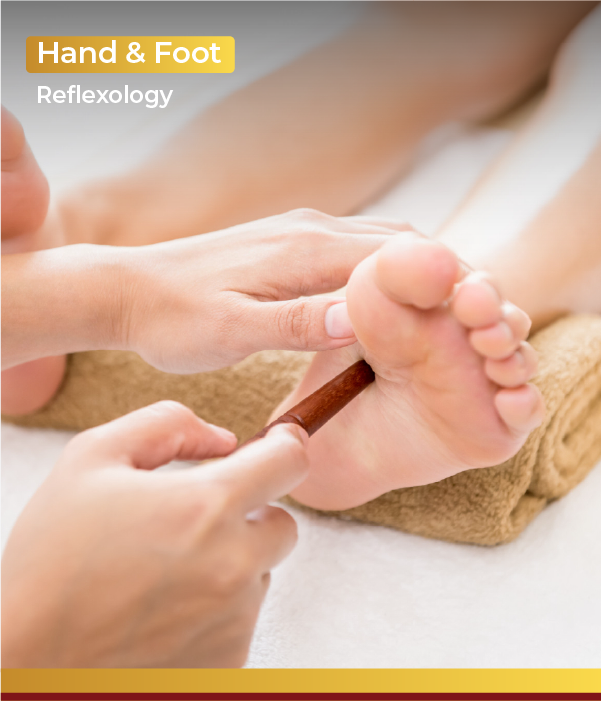
The therapeutic modality originating from ancient Chinese, Indian and Egyptian techniques works on the concept of zone analgesia, and an American masseuse Eunice Ingham developed the maps of the reflex points on feet and hands which form the basis of modern reflexology. This supportive therapy aids in improved blood circulation, which offers physiological effects and facilitates cell renewal. This powerful relaxation tool stimulates the zones that are linked to neurones or transmitters or networks of channels. Also, the touch therapy facilitates the release of serotonin, endorphins, neuropeptides and dopamine, which further contribute to the reduction of stress hormones and cortisol.
This amazing procedure is much more than a foot massage or hand massage and is not limited to people who live a stressful life but suits best all those who are looking for relief from soreness, muscle pain or stiffness.
The pressure massages, particularly those given on the soles of the feet, offer several benefits, with the thousands of nerve endings being manipulated during the treatment.
Ideally there is no difference in the outcome, and either of these can be chosen. But yes, as hands and feet have different skin thickness, the pressure requirement on the foot, which is mostly calloused, is more, whereas the hand requires gentle manipulation.